New Working Hours Reform and the Digital Revolution with Clocky
- 26/07/2024
In a constantly evolving world of work, the recent working hours reform in Spain has sparked intense debates and led to the adoption of new technological tools. One of the most notable innovations in this context is Clocky, our work time tracking solution. This combination of legislative reforms and technological advances is transforming the way we work and manage our time.
The Working Hours Reform: A Necessary Change
Currently, the conventional working regime in Spain, as set out in the Workers' Statute, establishes a working week of 40 hours spread over 5 days. However, with the aim of adapting the labour framework to contemporary realities and improving the balance between personal and professional life, an important working hours reform has been proposed. From 2024, the working week will be reduced to 38.5 hours. By 2025, a further reduction is planned, setting the working week at 37.5 hours.
This working hours reform seeks not only to offer greater flexibility and quality of life for workers, but also to boost productivity and satisfaction in the workplace. With shorter and more flexible schedules, employees are expected to be able to better manage their time, reduce stress and increase their efficiency. By allowing working hours to be adapted to individual and business needs, the aim is to create a more balanced and inclusive working environment.
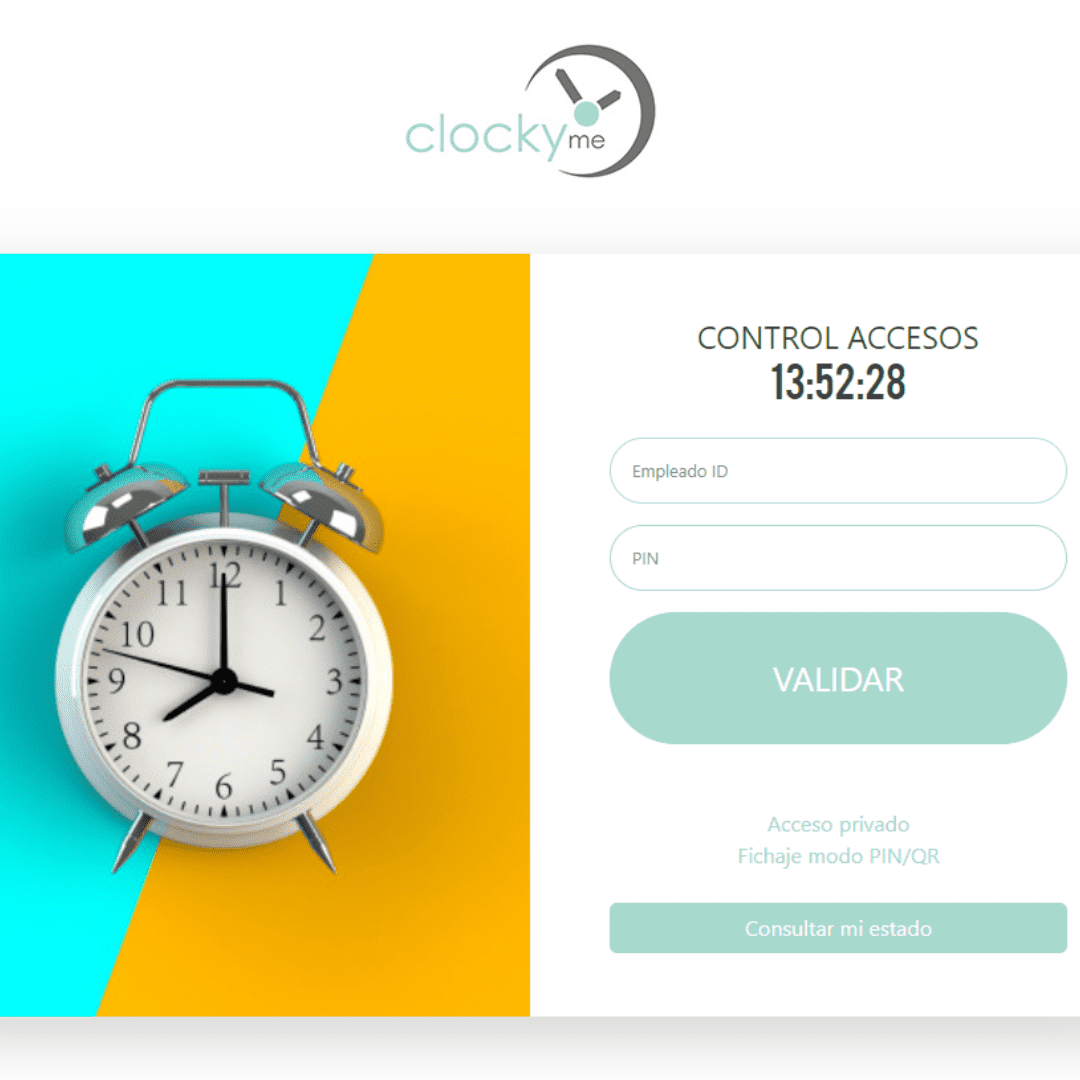
Clocky: The Digital Tool That Is Transforming Work Time Tracking
In the context of this reform, digital tools like Clocky, our work time tracking solution, are playing a crucial role. Clocky is a work time recording programme that facilitates time management and working hours tracking, aligning with the new regulations and simplifying compliance.
Clocky is not just a schedule control tool; it is a comprehensive platform that offers a variety of functions designed to optimise time management. It allows employees to accurately record their clock-in and clock-out times, automatically calculate hours worked and generate detailed reports on the working day.
Benefits and Challenges of Integrating Clocky into the Labour Reform
The implementation of Clocky brings numerous benefits. The accuracy in recording hours helps ensure that the new working hours regulations are met, while the ability to access detailed reports allows companies to identify areas for improvement in time management and productivity. The intuitive interface and customisable functions make it easy to adopt for both employees and human resources managers.
However, integrating Clocky also presents challenges. The reliance on technology for recording hours can raise concerns about privacy and excessive control. It is essential that companies implement Clocky in a way that respects employees' rights and promotes a fair working environment.
The combination of Spain's new working hours reform with digital tools like Clocky is marking a milestone in the evolution of work. While the regulations seek to offer greater flexibility and balance, tools like Clocky ensure that the implementation of these changes is efficient and precise.